
Home
>
Barn Owl Blog
>Farm & Ranch Cameras
>Understanding IP Ratings for Remote Cameras—and Why Barn Owl Leads the Pack
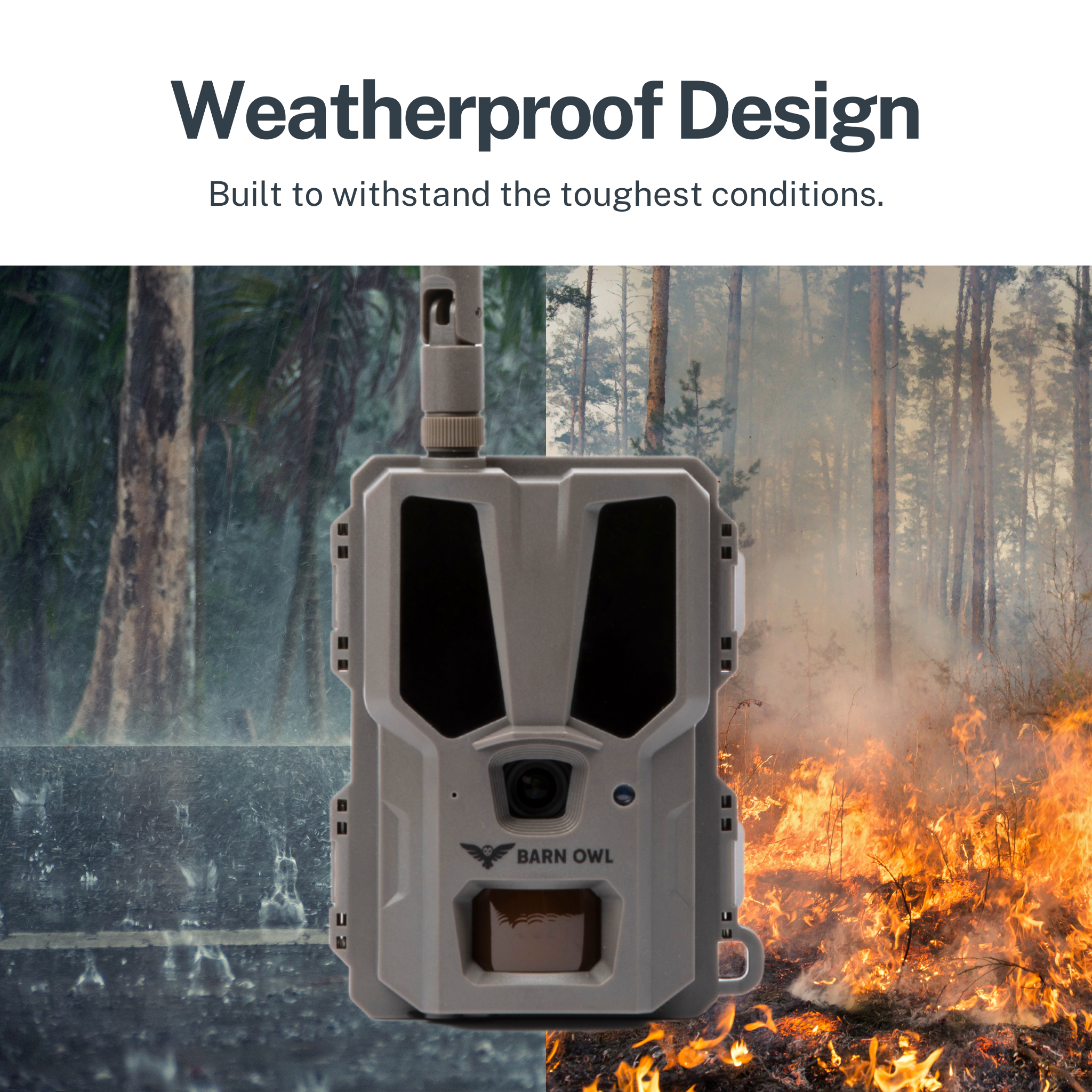
Understanding IP Ratings for Remote Cameras—and Why Barn Owl Leads the Pack
by Brian Adams
on Jun 30 2025
When choosing a remote camera system, especially for use in agriculture, ranching, or other rugged outdoor settings, durability is just as important as performance. One of the most reliable ways to evaluate a camera’s durability is by looking at its IP rating. But what exactly does that mean—and why does Barn Owl stand out among the competition?
What Is an IP Rating?
IP stands for Ingress Protection, a standard developed by the International Electrotechnical Commission (IEC). It measures how well a device is sealed against dust and water.
The IP rating is typically composed of two digits:
-
The first digit refers to protection against solids (like dust, dirt, and debris) and ranges from 0 to 6.
-
The second digit indicates protection against liquids, such as water, and ranges from 0 to 9.
For example, a camera with an IP65 rating is dust-tight (6) and protected against water jets (5), while a camera with an IP67 rating is both dust-tight and can be submerged in water up to 1 meter for 30 minutes.
Why IP Ratings Matter for Outdoor and Remote Cameras
Remote cameras are often deployed in locations where weather, dust, and wildlife can challenge the equipment.
If your camera is mounted on a fence post in the middle of a pasture or tucked away on a remote trail, it needs to withstand:
-
Heavy rain and snow
-
Blowing dust and wind
-
Extreme temperatures
-
Occasional encounters with curious animals
A high IP rating ensures that your investment can handle the environment without constant maintenance or replacement.
Barn Owl: Built for the Elements
Barn Owl Cameras are designed specifically for farmers, ranchers, and landowners, which means ruggedness is non-negotiable. That’s why Barn Owl offers some of the highest IP-rated remote cameras available today.
What does that mean in practical terms?
-
Dust-tight design: No fine dust can get into the housing, which is critical for cameras used on dirt roads, livestock pens, or dry fields.
-
Water resistance: Barn Owl cameras are protected from water immersion, making them dependable through heavy storms or snowy conditions.
-
Field-tested reliability: These cameras are used every day across the U.S. in places where weather is unpredictable and maintenance access is limited.
Why It Matters to You
With Barn Owl, you can trust that your cameras will continue capturing crucial footage—whether you're monitoring calving pens, watching gates, or checking equipment—no matter what the weather throws your way. Fewer service interruptions, less time spent troubleshooting, and more peace of mind.
Final Thoughts
When you’re investing in a remote camera system, don’t just focus on the features you can see on the screen—look at how well the camera can survive in the field. A high IP rating is your assurance that the camera is ready for real-world conditions. And when it comes to tough environments, Barn Owl is built to last.
Share


